

A CSA companion is perfect for assisting
…and just being there.
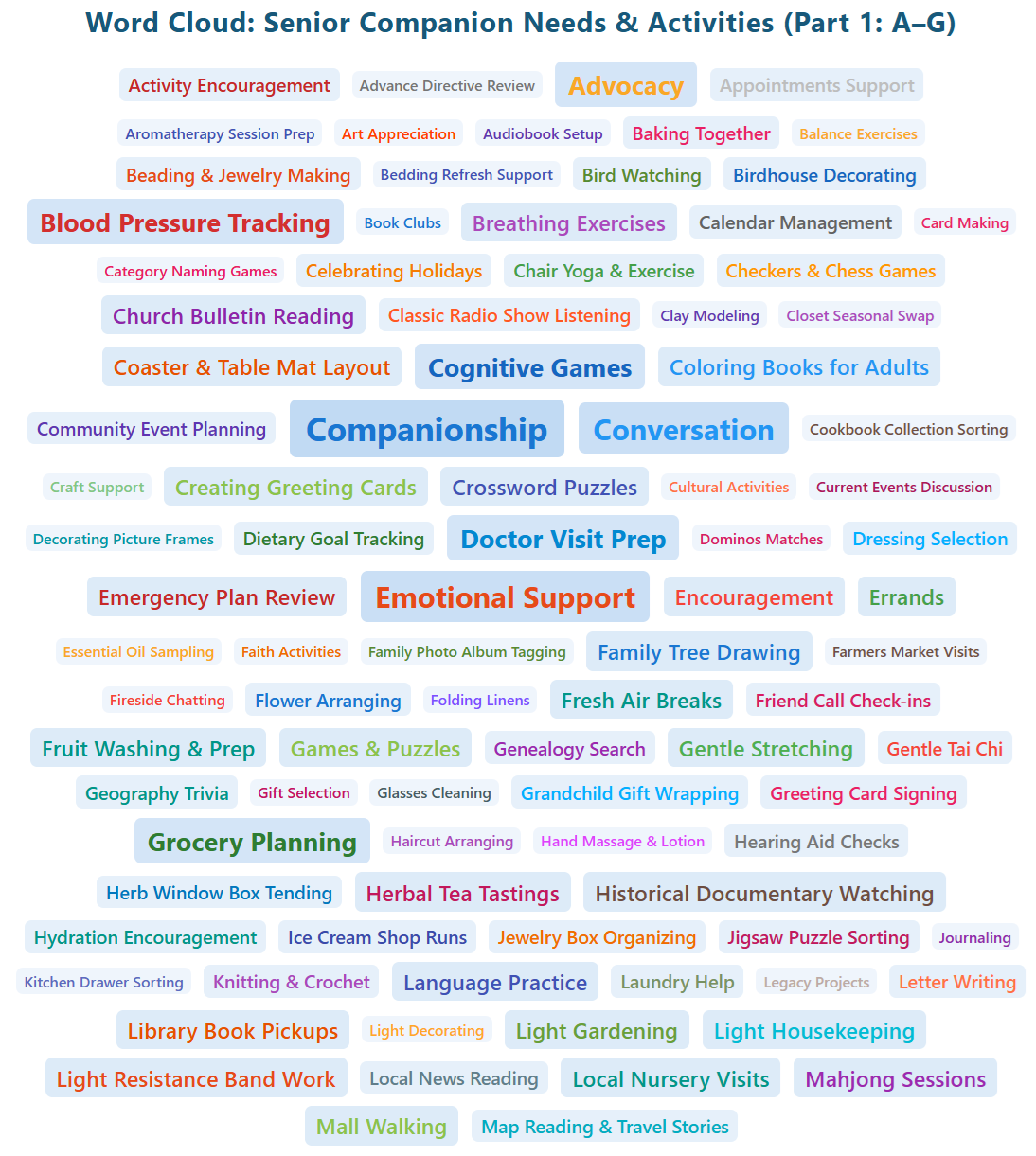
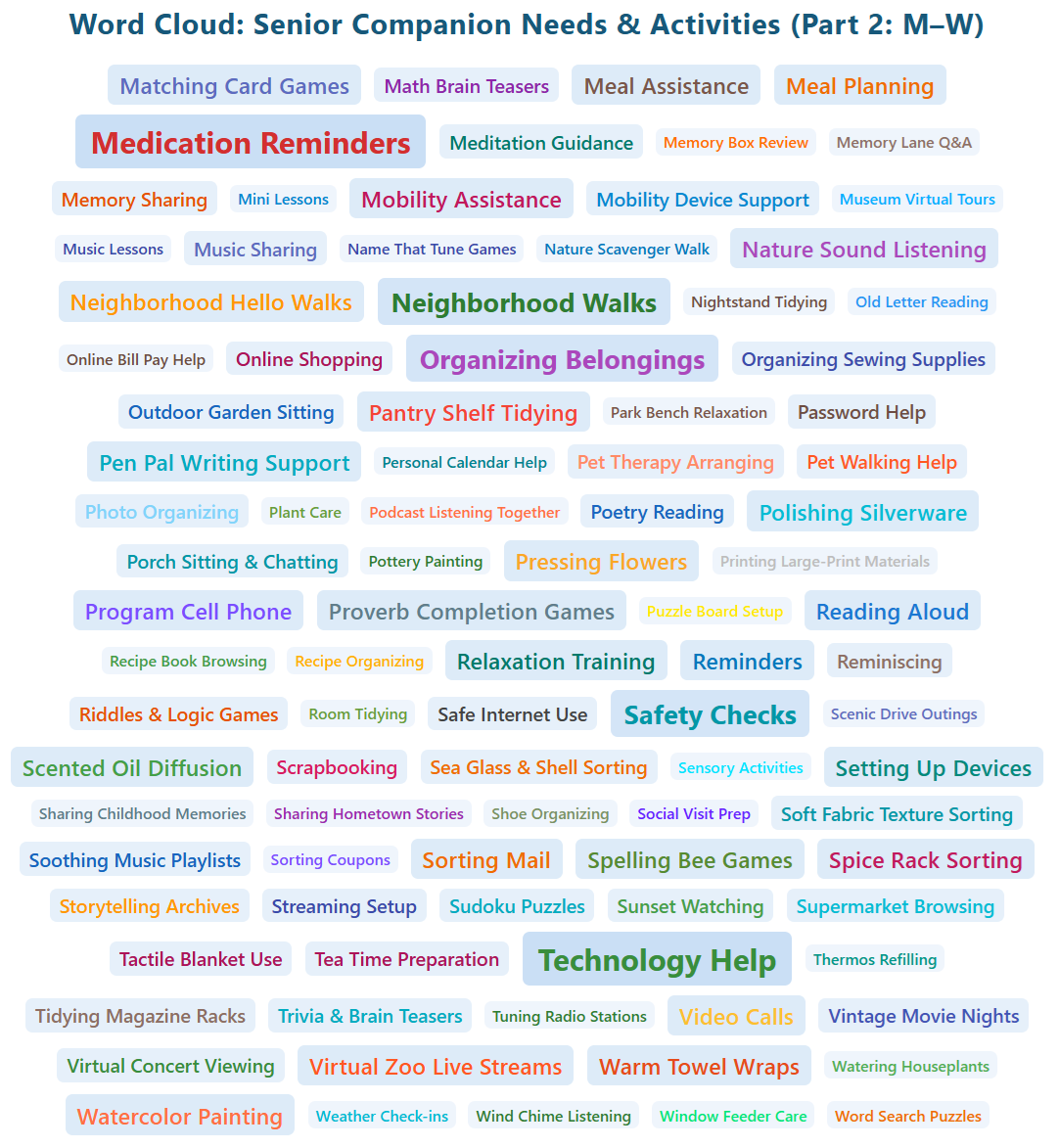
If you can think of it - we can get it done together~
Emotional and Social Support
Providing companionship and conversation
Reading books, newspapers, or mail aloud
Playing games or puzzles together
Listening to music or creating playlists
Reminiscing over memories and photos
Writing letters or cards on their behalf
Encouraging and supporting hobbies (knitting, art, etc.)
Facilitating video calls with distant contacts
Celebrating birthdays and holidays together
Accompanying on walks or to common areas
Providing gentle encouragement and motivation
Offering a non-judgmental ear for venting
Helping keep a gratitude journal
Storytelling sessions (listening or sharing)
Reading poetry or inspirational passages
Practical Daily Assistance
Organizing and managing personal calendars
Reminding about appointments or activities
Sorting and organizing personal belongings
Assisting with simple wardrobe choices
Helping pick out and send gifts
Labeling and organizing important papers
Running light errands within the facility
Assisting with laundry (folding, organizing)
Arranging for dry cleaning or laundry service
Tidying rooms (light housekeeping)
Replacing batteries or light bulbs in personal electronics
Watering plants or tending to small indoor gardens
Shopping online for personal needs
Picking up and delivering packages
Assisting with meal choices or tray setup
Encouraging hydration and nutrition
Technology Support
Programming and troubleshooting cell phones
Setting up and managing tablets or e-readers
Organizing digital photos
Assisting with email setup and use
Helping with video chat apps (Zoom, FaceTime, etc.)
Programming TV remotes and streaming services
Setting up voice assistants (Alexa, Google Home)
Teaching safe internet practices
Managing online accounts and passwords
Helping with online shopping or bill pay
Uploading music or audiobooks
Setting reminders or alarms on devices
Jeremy Hickling / CSA® . CAPS . CNA
Certified Senior Advisor & Senior Transition Advisor
📞 425.894.4316 / 🌐 Jeremy@HeartWiseAllies.com
Advocacy and Liaison
Acting as an advocate in care-plan meetings
Communicating preferences to facility staff
Helping understand facility policies
Ensuring personal dignity and respect
Reporting maintenance or safety concerns
Alerting staff/family to changes in health or mood
Helping with advance directive or paperwork reviews
Enrichment & Learning
Teaching new skills (crafts, tech, games)
Bringing in educational or inspirational materials
Organizing mini book clubs or discussion groups
Researching topics of personal interest
Arranging for or providing lessons (music, language, etc.)
Introducing simple mindfulness or relaxation techniques
Organizing cultural or faith-based activities (music, readings, holidays)
Supporting creative writing or journaling
Sharing news or current events in accessible ways
Other Specialized Needs
Coordinating pet therapy visits
Arranging for window or patio gardening
Sourcing and managing adaptive devices
Helping with light seasonal decorating
Facilitating participation in facility committees or councils
Arranging for volunteer visits or pen pals
Organizing memory boxes or sensory activities
Supporting end-of-life wishes (legacy projects, ethical wills)
Guiding on age-in-place or safety modifications for their space
Providing gentle reassurance during transitions (new roommate, facility changes)
Health & Wellness Support (Non-Medical)
Encouraging and assisting with light exercise (chair yoga, stretching)
Providing companionship during walks
Reminding to take medication (non-administering)
Coordinating with facility staff for wellness needs
Monitoring for changes in mood or behavior
Supporting relaxation or meditation practices
Arranging for haircuts, grooming, or personal care appointments
Assisting with glasses, hearing aids, or mobility devices
Encouraging participation in facility activities
Finding and printing large-print materials
Guiding on safe use of mobility aids